Certificate of Compliance Cape Town
What is a Beetle Certificate of Compliance (COC)?
All wood-destroying organisms are destructive and recommendations for treatment will be given whenever an infestation is found. Once a property is clear of any infestations, the certificate of clearance will be issued. The certificate is valid for three months from the date of issue
General pests such as cockroaches, fleas, ants, flies, fish moths, lice, bees, birds and rodents etc. are not included when inspecting a property for purposes of issuing a Beetle Certificate of Clearance.
Beetle COC checklist:
Pre-construction:Foundation trenches, v-channels and under solid floor areas are treated with a termiticide drenching.
Post-construction:The entire structure is drilled through the outside perimeter wall to reach below the floor slab and a solution of termiticide is injected into the holes.
Nests:Holes are drilled into the nests and the nests are flooded with a solution of termiticide. Surface areas surrounding nests are also sprayed.
There are many types of wood-destroying organisms however, in the Western Cape the majority of offer-to-purchase contracts refer to three species of beetles namely:
ANOBIUM PUNCTATIUM (Common furniture Beetles )
HYLOTRUPES BAJULES
OXYPLERUS NODIERI (longhorn beetle)
Other Services include the following:
All wood-destroying organisms are destructive and recommendations for treatment will be given whenever an infestation is found. Once a property is clear of any infestations, the certificate of clearance will be issued. The certificate is valid for three months from the date of issue
General pests such as cockroaches, fleas, ants, flies, fish moths, lice, bees, birds and rodents etc. are not included when inspecting a property for purposes of issuing a Beetle Certificate of Clearance.
Beetle COC checklist:
- West Indian dry wood termites
- Brown house borers
- Italian beetles
- Common furniture beetles
- Powder post beetles
- False furniture beetles
- Subterranean termites
- Harvester termites
- Any wood-destroying organism of economic significance in an accessible area
Pre-construction:Foundation trenches, v-channels and under solid floor areas are treated with a termiticide drenching.
Post-construction:The entire structure is drilled through the outside perimeter wall to reach below the floor slab and a solution of termiticide is injected into the holes.
Nests:Holes are drilled into the nests and the nests are flooded with a solution of termiticide. Surface areas surrounding nests are also sprayed.
There are many types of wood-destroying organisms however, in the Western Cape the majority of offer-to-purchase contracts refer to three species of beetles namely:
ANOBIUM PUNCTATIUM (Common furniture Beetles )
- Found predominately in wooden flooring
HYLOTRUPES BAJULES
- Found predominately in roof trusses, fascia boards and wendy houses
OXYPLERUS NODIERI (longhorn beetle)
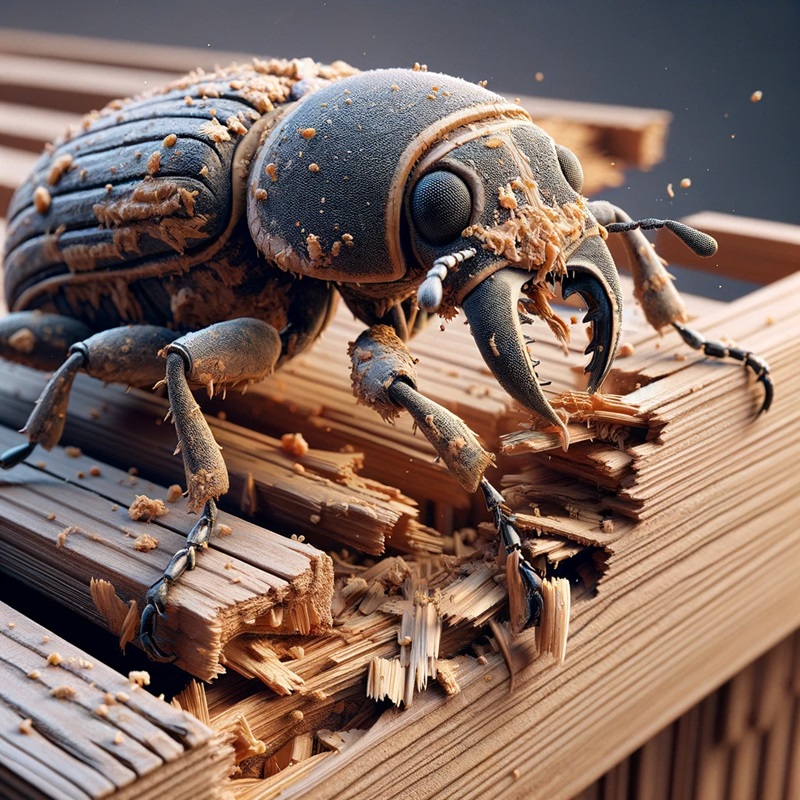
- Found predominately in roof trusses, fascia boards and wendy houses. Their eggs are laid in the cracks of wood and tunnel through over a period of years, which eventually destroys the structure.
Other Services include the following:
- Electrical Certificate of Compliance (COC)
- Water Certificate of Compliance (COC)
- Gas Certificate of Compliance (COC)